

Every watch has its own schedule
The parts inside a movement depend on cleanliness and suitable lubrication. Oils change with age, and seals lose elasticity. These changes can remain invisible for a while: the watch may still appear to keep perfectly respectable time.
A change in accuracy or power reserve often prompts a closer look. If the watch has stopped, the circumstances help determine the next step. Moisture beneath the crystal needs prompt professional attention.
Start with the model’s instructions and its last service date. Age matters, but so does history. Water, impacts or a poor previous repair can change what a watch needs.
Why the suggested intervals differ
Manufacturers give quite different guide intervals: roughly three to four years for Grand Seiko, five to eight for OMEGA and around ten for Rolex, with qualifications about the model and its use. Those recommendations belong to the respective watches, rather than to mechanical watchmaking as a whole.
Remember that variation when someone confidently suggests a universal five-year rule. Checking the current guidance for your reference is more useful than choosing an average.
Notice a change in habits
An owner often spots a small change first: a watch used to run through the night but now stops, or a once-smooth crown becomes stiff. A sudden change in timekeeping, a sticking date or an unfamiliar rotor noise also warrants investigation.
After a hard impact, a moving seconds hand alone is not reassurance. Droplets or persistent mist beneath the crystal deserve prompt service attention; moisture cannot wait for the next scheduled visit.
Water resistance has a separate timetable
A clean, adjusted movement does not by itself make a case ready for swimming. Seals, crystal and crown have their own job, so a water-resistance test may be needed before a full movement service.
OMEGA, for example, recommends checking water resistance annually. Follow your own watch’s instructions, particularly after the case has been opened or suffered an impact. Immersing it at home cannot replace a workshop pressure test.
What a service involves
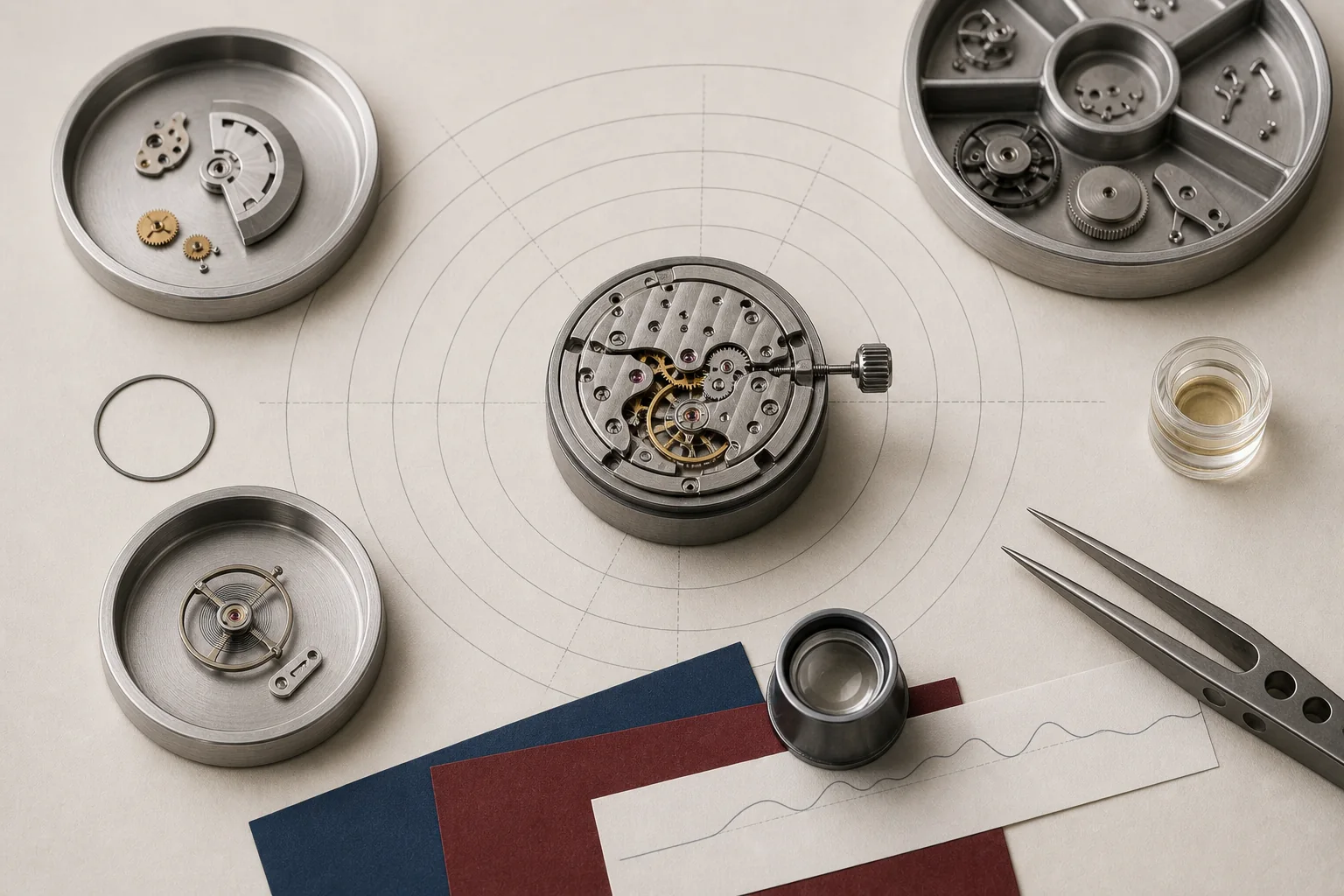
A full service includes dismantling, cleaning and examining the movement, replacing necessary parts, lubricating, reassembling and adjusting it. Functions, timekeeping and the assembled watch’s water resistance are then checked. A simple rate adjustment is a much smaller job.
Discuss the estimate and replacement parts beforehand. Case polishing is a separate decision: some owners want the shine restored, while others prefer to keep the marks of wear. Ask for the test results and service warranty when the watch returns.
Give the watchmaker its story
A short history is useful: when the watch was last serviced, what changed and when it happened. Several daily readings against the same reference are more informative than “it has started running strangely”.
There is no need to open the case or oil the crown before the appointment. Bring the paperwork and your observations; they help the watchmaker investigate and help you return to an easy routine with the watch.
Sources
Technical and historical facts were checked against material from manufacturers, museums and specialist organisations. Read more in How we prepare articles.