
Where the energy lives
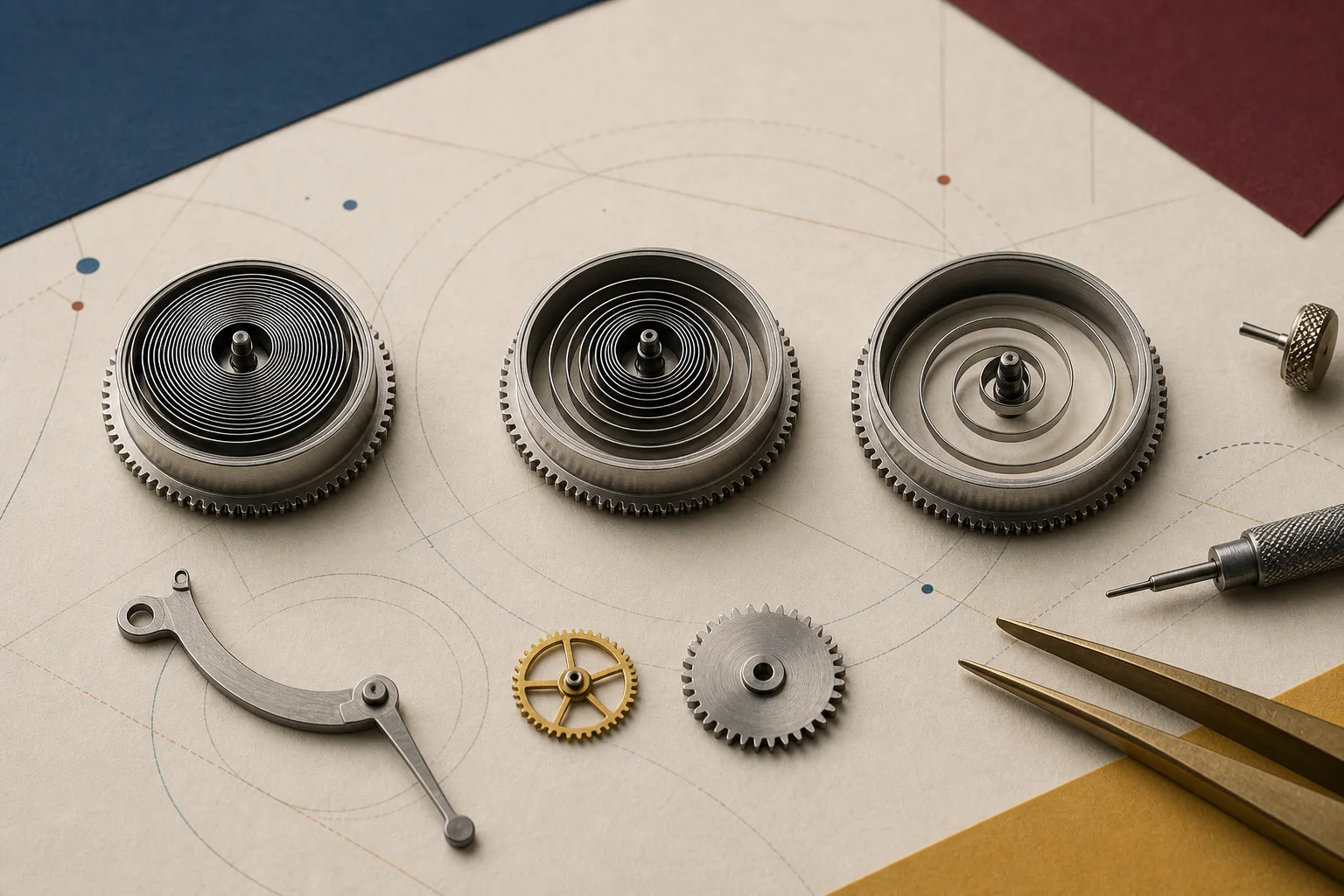
A long mainspring sits inside the barrel. Winding stores energy in it, which is gradually passed to the wheels, escapement and balance. The movement runs for as long as sufficient energy remains available.
The spring receives energy through hand-winding at the crown or from an automatic rotor. What remains can also matter to timekeeping: a watch may run differently near the beginning and end of its reserve.
Power reserve is measured from a full wind to a stop. A few crown turns or a short walk do not necessarily earn the entire published figure; the starting state of wind must be known.
Why running times differ
Duration depends on the spring, barrel size and number, balance frequency and the movement’s efficiency. Designers coordinate those parts rather than simply adding hours to an attractive specification.
Seiko lists around 41 hours for the 4R35, for example, while certain Grand Seiko calibres offer 72 hours or more. Compare exact versions: a brand name alone does not establish running time.
What an ordinary day changes
An automatic gains energy when its rotor moves. Several quiet hours at a computer may provide less winding than an owner expects from a day of wear. The watch taken off at night is not necessarily fully wound.
Movement condition also affects duration. If the reserve after a confirmed full wind has fallen noticeably from its usual level, record the result and arrange a diagnosis.
A small scale with a useful purpose
A power-reserve indicator shows the state of the mainspring’s wind. On a manual watch, it is a helpful reminder to give the crown some attention. On an automatic, it can reveal whether your usual activity is supplying enough energy.
The scale should not always be read as a countdown to the minute. It estimates remaining energy; precise duration requires a separate cycle from full wind to stopping.
Fit the reserve to your week
If you wear one watch every day, a modest reserve may be entirely convenient. If you rotate watches or take weekends off, a longer reserve provides welcome freedom from resetting.
Restart a stopped movement as its maker instructs, using hand-winding only where supported. Running for a long time and keeping accurate time are separate qualities; the pleasure lies in how both fit your life.
Sources
Technical and historical facts were checked against material from manufacturers, museums and specialist organisations. Read more in How we prepare articles.