
Three materials, one job
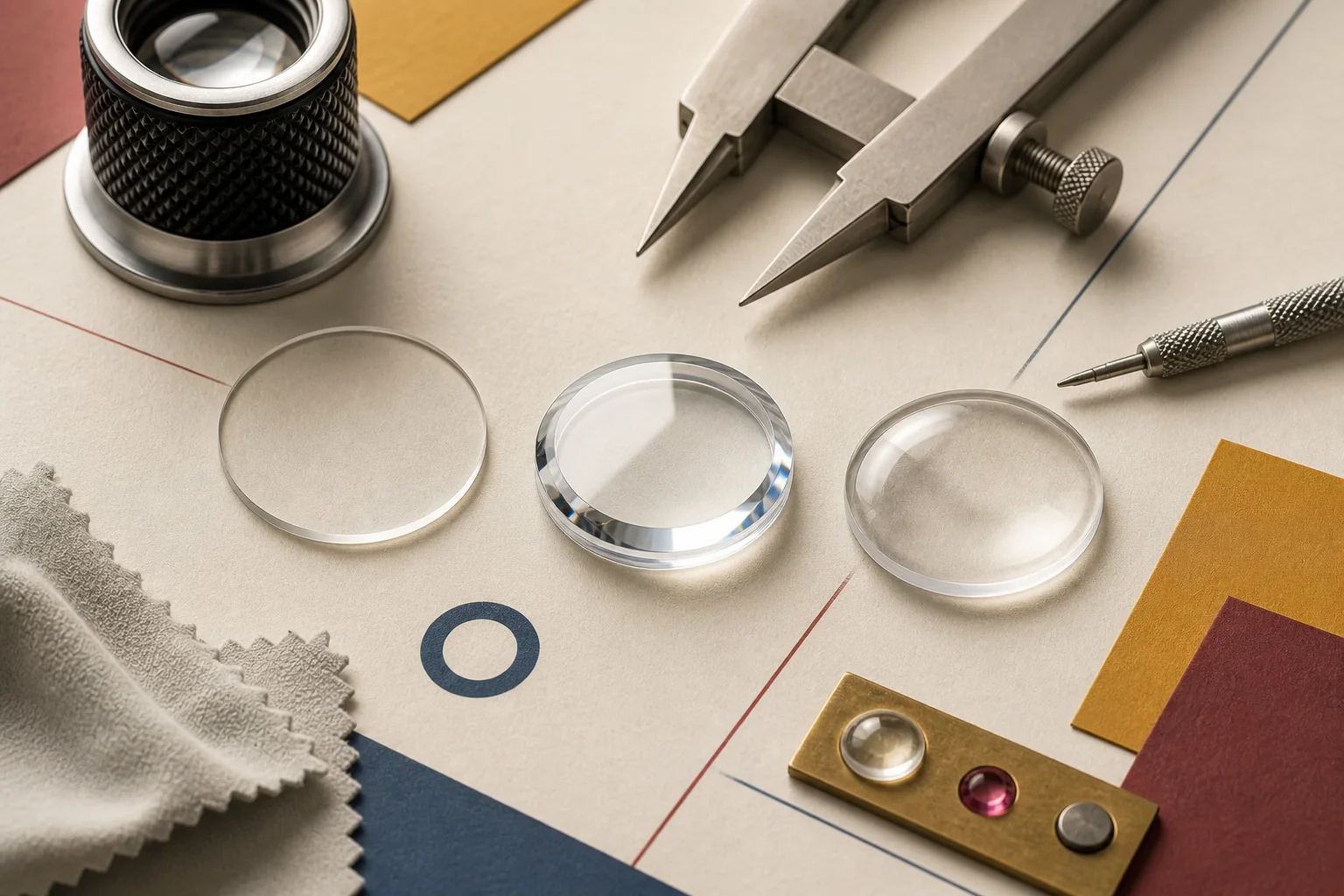
A sapphire watch crystal is grown from aluminium oxide, then cut and polished to shape. In watchmaking, “crystal” describes the transparent part protecting the dial, even when its material is not crystalline.
A tall dome can change a watch’s apparent size, while its seal contributes to water resistance. These details deserve attention whether you prefer quartz or mechanical watches.
Mineral glass is closer to familiar glass, though watchmakers may strengthen it with additional treatments. Acrylic is a transparent polymer: softer, but well suited to expressive rounded shapes.
Scratches and impacts are different stories
Sapphire stands up well to everyday contact that could mark a softer surface. Mineral glass scratches more readily, acrylic more readily still, but many small marks on acrylic can be polished out.
Impact resistance is more complicated. Thickness, shape, mounting and bezel protection all matter. Neither “sapphire cannot break” nor a blanket claim that it is fragile adequately describes a particular watch.
A dome changes the mood
A flat crystal often looks restrained. A tall dome adds depth and can recall vintage watches. The minute track may appear to bend near the edge, a pleasing effect for some owners and a distraction for others.
A complex sapphire shape is harder to produce than a moulded acrylic one, which affects cost. Ask about replacement availability and price, especially for an unusual crystal.
When reflections fade
An anti-reflective coating makes the dial easier to see. It can be applied inside, outside or on both surfaces; turning the watch near a window is a good way to appreciate the result.
An external layer is exposed to contact and can acquire marks before the sapphire itself. A visible line does not always mean the underlying crystal is scratched; a watchmaker can distinguish the two.
Choose a view you enjoy
Sapphire suits someone who wants fewer worries about everyday scratches. Mineral glass often offers an affordable replacement, while acrylic appeals through both its appearance and the possibility of polishing away some wear.
Look at the watch under different lighting and read it at an angle. There is no need to scratch or heat the crystal to identify it. Its job is to protect the dial and make looking at it a pleasure.
Sources
Technical and historical facts were checked against material from manufacturers, museums and specialist organisations. Read more in How we prepare articles.