
A wrist has a shape
Circumference helps determine strap length, but says little about how flat the top of your wrist is. Two wrists with the same circumference can be broader or rounder, giving the same watch a different fit.
Once the case feels comfortable, take a closer look at the crystal’s shape and ask about water resistance. Choosing between quartz and mechanical adds another question to those outward proportions: how will the watch fit into your day?
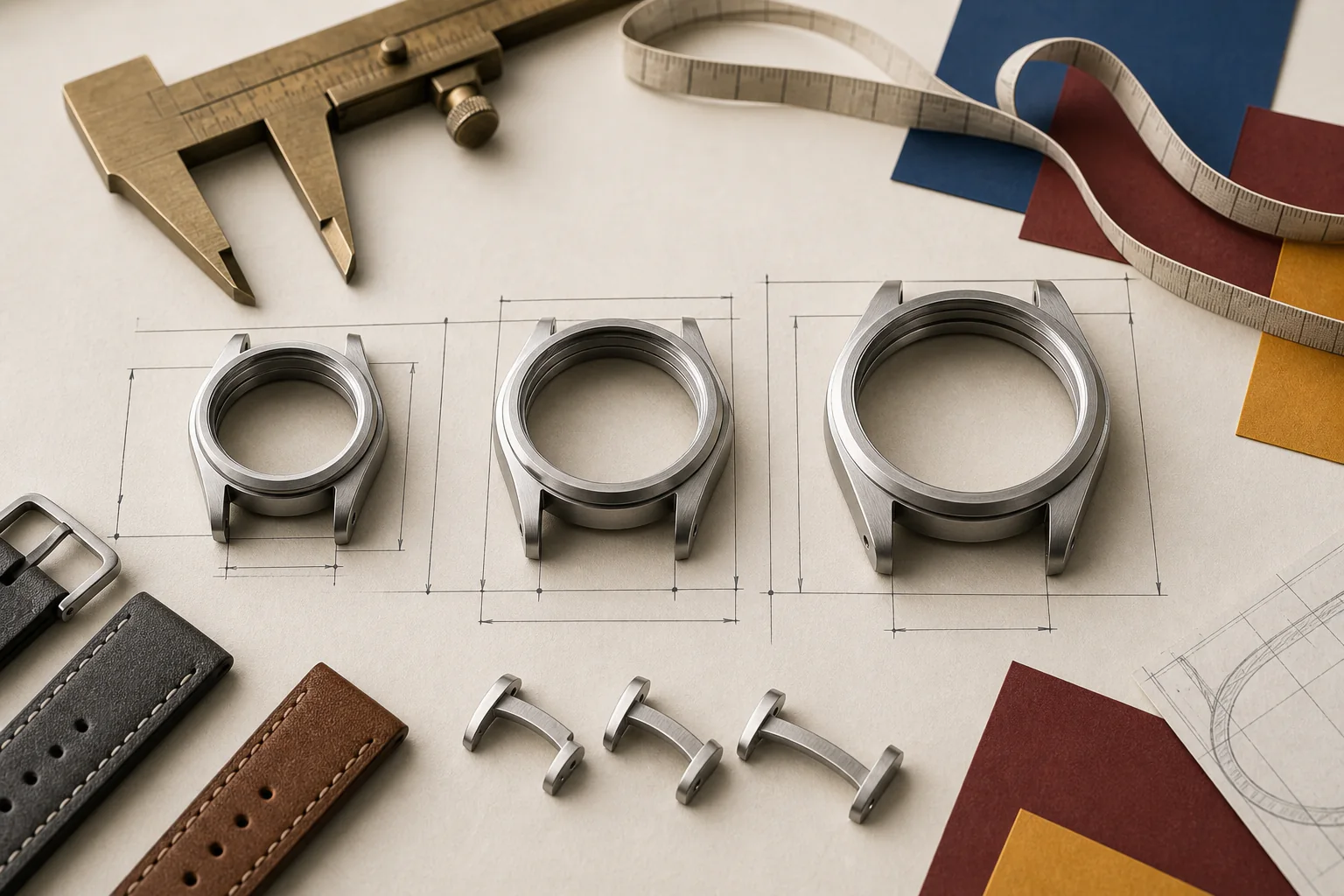
When shopping remotely, measure both circumference with a soft tape and the approximate flat width available for the case. These figures are particularly useful alongside a watch you already enjoy wearing.
Diameter leaves things out
Diameter usually excludes the crown and says nothing about lug length. Visual size also depends on the dial: a broad, light dial with a slim bezel often looks larger than the same case diameter with a wide surrounding ring.
For square and rectangular watches, consider width and height together. A side photograph adds information that a neat overhead picture cannot provide.
What lug-to-lug tells you
Lug-to-lug is the distance between the outer tips of the upper and lower lugs. It helps show where the case ends and the strap begins wrapping around your wrist. Lugs extending far beyond the upper surface may leave the watch sitting insecurely.
Shape matters here too. Downward-curving lugs can settle a longer case comfortably, while straight, substantial ones can make a shorter watch awkward. Treat the measurement as a fitting guide rather than an absolute limit.
Remember the height
Thickness makes itself known under a cuff and during movement. A tall case may tend to roll on a soft, light strap, while a broader but lower watch can feel more stable.
Look at where the height comes from: a transparent dome appears different from a thick metal case wall. A bracelet changes the experience too by distributing weight around the wrist.
Take a step back
Lower your arm and look in a mirror from a little distance. A phone held close to the wrist often exaggerates the watch’s size. Then bend your wrist and try your usual sleeve: does the crown press into your hand, and does the case clear the cuff?
A comfortable fit need not match someone else’s idea of a men’s or women’s diameter. Choose proportions that feel good and that you will enjoy seeing throughout the day.
Sources
Technical and historical facts were checked against material from manufacturers, museums and specialist organisations. Read more in How we prepare articles.