

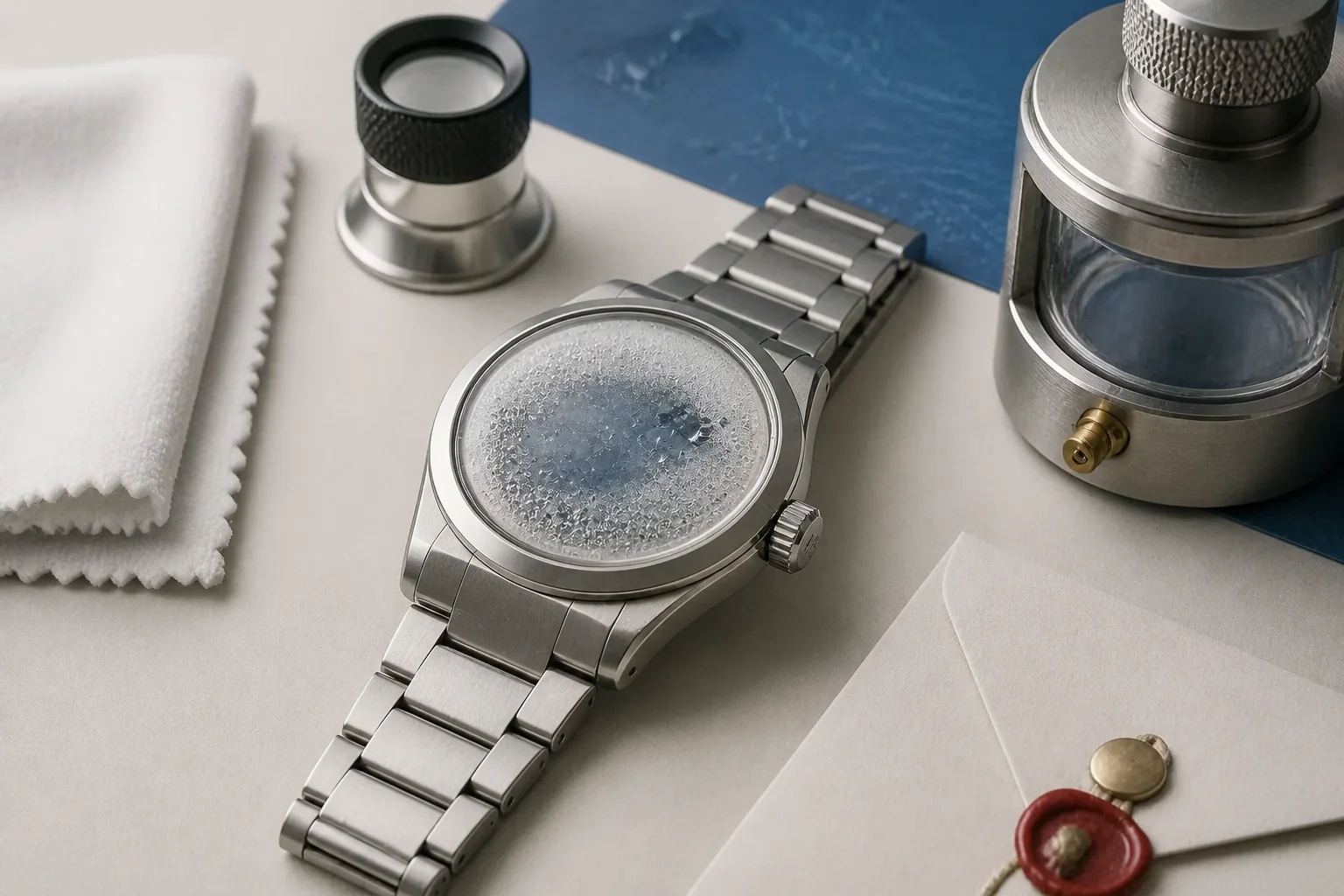
Which side of the crystal?
Gently wipe the crystal with a soft, dry cloth. An outside film will clear; internal mist or droplets will remain. There is no need to press on the crystal or operate the crown to investigate.
Condensation is a reminder that water resistance depends on case condition. Even if the watch has stopped, do not try winding it with moisture inside. Professional service matters more than any further home check.
A very light haze after a sudden temperature change can sometimes clear quickly. Visible droplets, recurring condensation or persistent mist are reasons to contact a service centre promptly.
What to do first
Take the watch off and stop operating it: do not wind it, set the hands or press the pushers. Leave an already closed crown closed; pulling it out does not provide a safe way to dry the movement.
Dry the exterior only and keep the watch at room temperature, away from water. Contact a workshop and describe what happened before the mist appeared: swimming, a shower, an impact, a temperature change or recent repair.
A clear crystal is not the whole story
Condensation may disappear as the temperature settles. That does not prove water has left the case: it can remain inside and condense on the crystal again later.
Moisture can affect steel parts, lubricants and the finish of the dial and hands. Visible droplets should therefore not be left until tomorrow just to see what happens. An earlier inspection gives the water less time to cause damage.
Keep it away from household drying tricks
A hairdryer, radiator, oven or direct sun heats the case unevenly. Heat can harm seals, adhesives and finishes without addressing the leak. Rice cannot reliably dry a closed movement and can introduce dust.
Do not open the back yourself. Working safely on a wet watch takes suitable equipment and experience, and the reassembled case will still need a water-resistance test.
What matters after repair
The watchmaker looks for the entry point as well as the moisture: crystal, back, crown or pushers. The movement and dial are inspected, affected parts are cleaned or replaced, and the seals receive the necessary attention.
The repair ends with a water-resistance test appropriate to the model. If condensation appeared soon after previous work, bring that paperwork; the sequence of events can help explain the cause.
Sources
Technical and historical facts were checked against material from manufacturers, museums and specialist organisations. Read more in How we prepare articles.