

What sets the rhythm
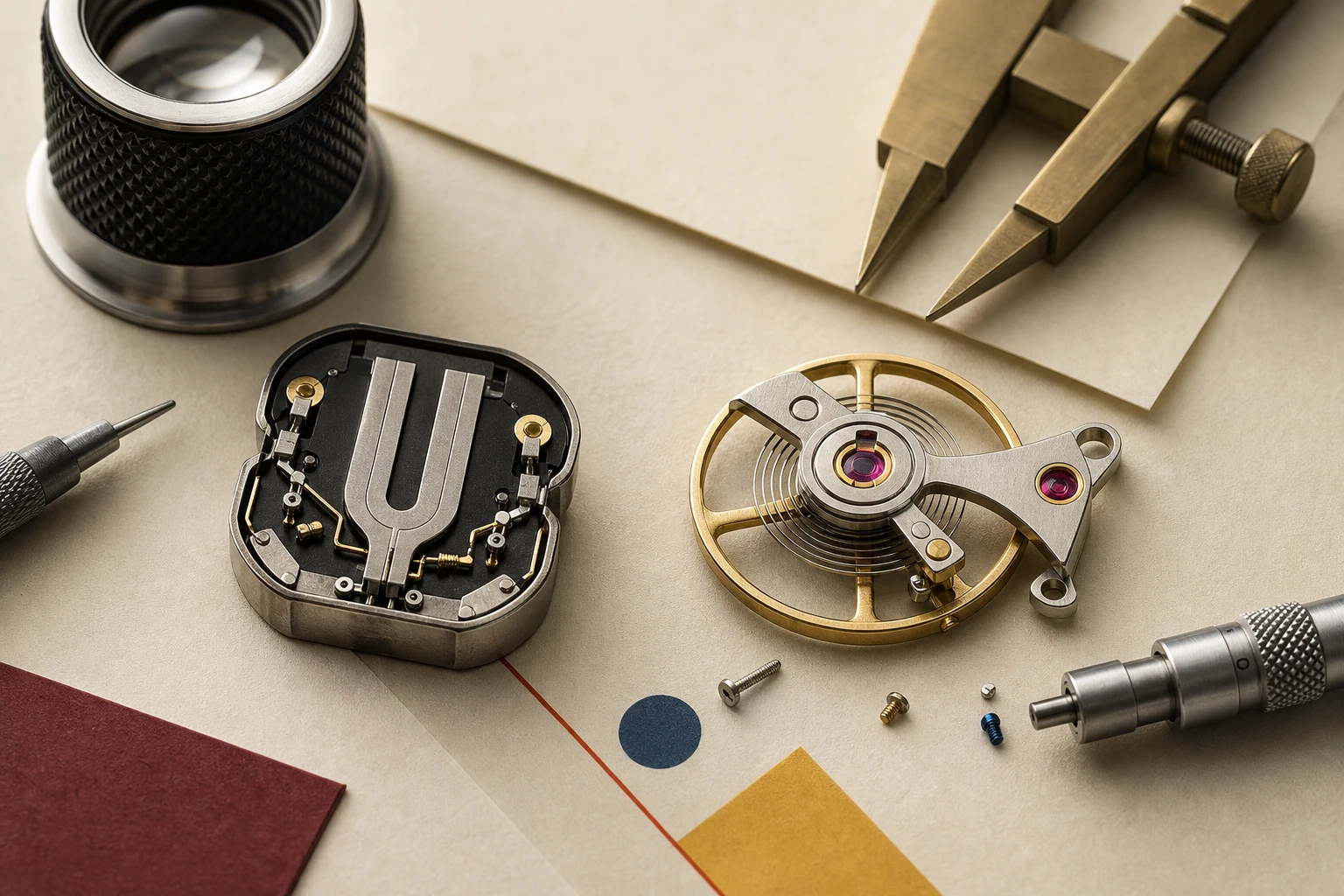
A mechanical watch runs on energy stored in its mainspring. The spring gradually drives the wheels, while the escapement and balance help divide that energy into regular steps. Their work is what you hear in the ticking.
The difference becomes particularly clear through everyday timekeeping and the habit of winding a watch. Water resistance calls for a separate look at the case, whatever rhythm lies inside.
In a quartz watch, a battery or rechargeable cell powers a circuit with a crystal resonator. Its vibrations provide the basis for timekeeping. An analogue model still has a motor, wheels and hands, so an electronic rhythm can sit behind a thoroughly traditional dial.
Why quartz holds its time more easily
A typical watch quartz crystal vibrates at 32,768 Hz, far faster than a mechanical balance. This stable rhythm allows many quartz watches to accumulate error much more slowly. Their accuracy is therefore often quoted per month or year, compared with per day for a mechanical movement.
Two examples show the scale: Seiko’s mechanical 4R35 has a stated tolerance of −35/+45 seconds a day under specified conditions, while the quartz Grand Seiko 9F61 is rated at ±10 seconds a year. These figures belong to those calibres; other watches have their own specifications.
Different everyday habits
Quartz offers readiness: while power remains available, a long break from wearing it usually does not mean resetting the calendar. A mechanical watch needs its energy replenished through the crown or, with automatic winding, movement of the wrist.
Some people find that extra involvement unnecessary; others enjoy it. Winding in the morning, hearing the ticking and watching a balance through the back can make the mechanism feel more familiar.
Both need care
Quartz watches eventually need attention to power, seals and other components. Mechanical movements also depend on ageing lubricants, seals and wearing surfaces. A long working life for either type rests on appropriate, accessible servicing.
Water resistance belongs mainly to the case: crystal, back, crown and seals. Movement type does not determine it, and the case should be checked after opening, including for a battery replacement.
Which will feel like yours?
If accurate time with few daily tasks appeals, quartz offers a straightforward kind of comfort. If the mechanism itself interests you and participation is enjoyable, mechanical watchmaking has its own charm.
Solar charging can make quartz more convenient, while automatic winding reduces manual attention for a mechanical watch. Consider specific models, try them on and ask about care. There is room to enjoy both approaches, even within the same collection.
Sources
Technical and historical facts were checked against material from manufacturers, museums and specialist organisations. Read more in How we prepare articles.