

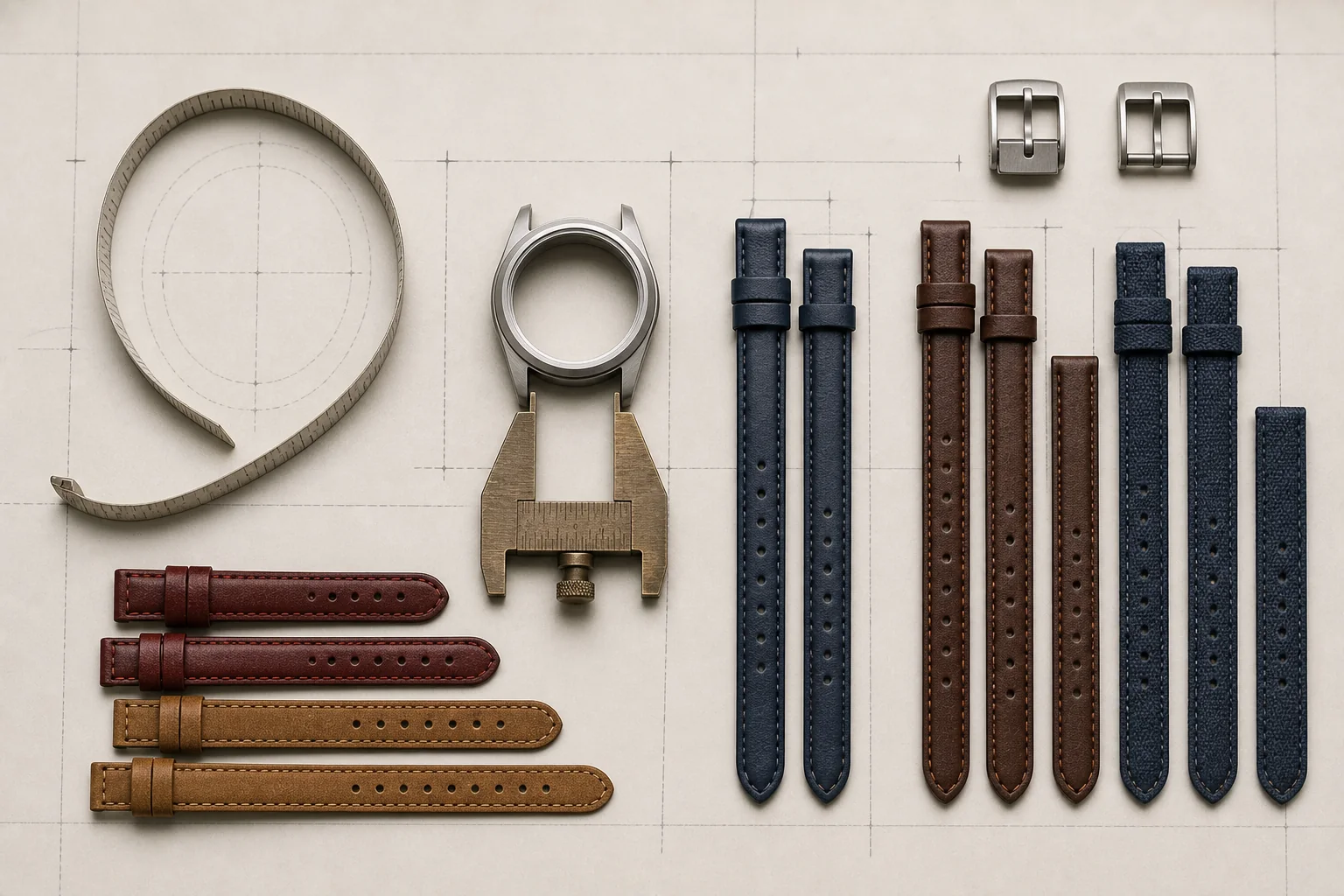
Start between the lugs
A “20 mm” strap normally refers to its width at the case. Measure the clear distance between the lugs, preferably with callipers, without rounding: the difference between 19 and 20 mm matters here.
One strap can keep a case sitting comfortably, while another lets it move around. The weight of the metal plays a part too. If the replacement is for swimming, first check that the watch’s water resistance permits it.
A narrow strap leaves gaps; a wide one bunches up and rubs. A curved or integrated end needs to fit the particular case, so matching the width alone is not enough.
Keeping your original buckle
A strap may be 20 mm at the case and taper to 18 or 16 mm at the buckle. Taper changes the look, making the silhouette lighter, but retaining an original clasp requires the right attachment width and thickness.
Compare the buckle with the replacement before ordering. A suitable fit should neither squeeze the leather at the sides nor leave noticeable play.
Length comes in two parts
Strap makers usually give separate lengths for the hole end and buckle end. S, M and L can mean different things between brands, so actual millimetres are more useful than a familiar size letter.
A comfortable old strap makes an excellent reference. Measure both halves using the seller’s method and note the hole you use. The buckle is usually excluded from the short section’s length, but check the measurement convention.
Wrist circumference is a starting point
Use a soft tape where you actually wear the watch. Part of that circumference is occupied by the case itself, which is why the same strap can fasten differently on short and long watches.
Thick leather, a domed case back and wrist shape also affect fit. When ordering without a fitting, give the seller your wrist measurement alongside the dimensions of a strap that already works.
Where the buckle should sit
The buckle ideally sits near the centre of the underside of the wrist, with the tail passing securely through the keepers without excessive spare length. If the clasp falls towards an edge, a different balance between the two halves may help more than a longer strap overall.
A little adjustment room in either direction is useful as fit changes with the weather. At your usual hole, the watch should remain secure without squeezing the wrist.
Check the attachment
Before fitting, compare the spring bars and strap thickness with the space around the case. A quick-release lever is convenient provided it clears the back; an overly thick end may not fit between bar and case.
After fitting, gently pull each half over a soft surface to check that both bars are seated. Choose the material for your use: leather dislikes prolonged moisture, and rubber cannot increase the watch’s own water resistance. With the fit settled, enjoy choosing the colour and texture.
Sources
Technical and historical facts were checked against material from manufacturers, museums and specialist organisations. Read more in How we prepare articles.