

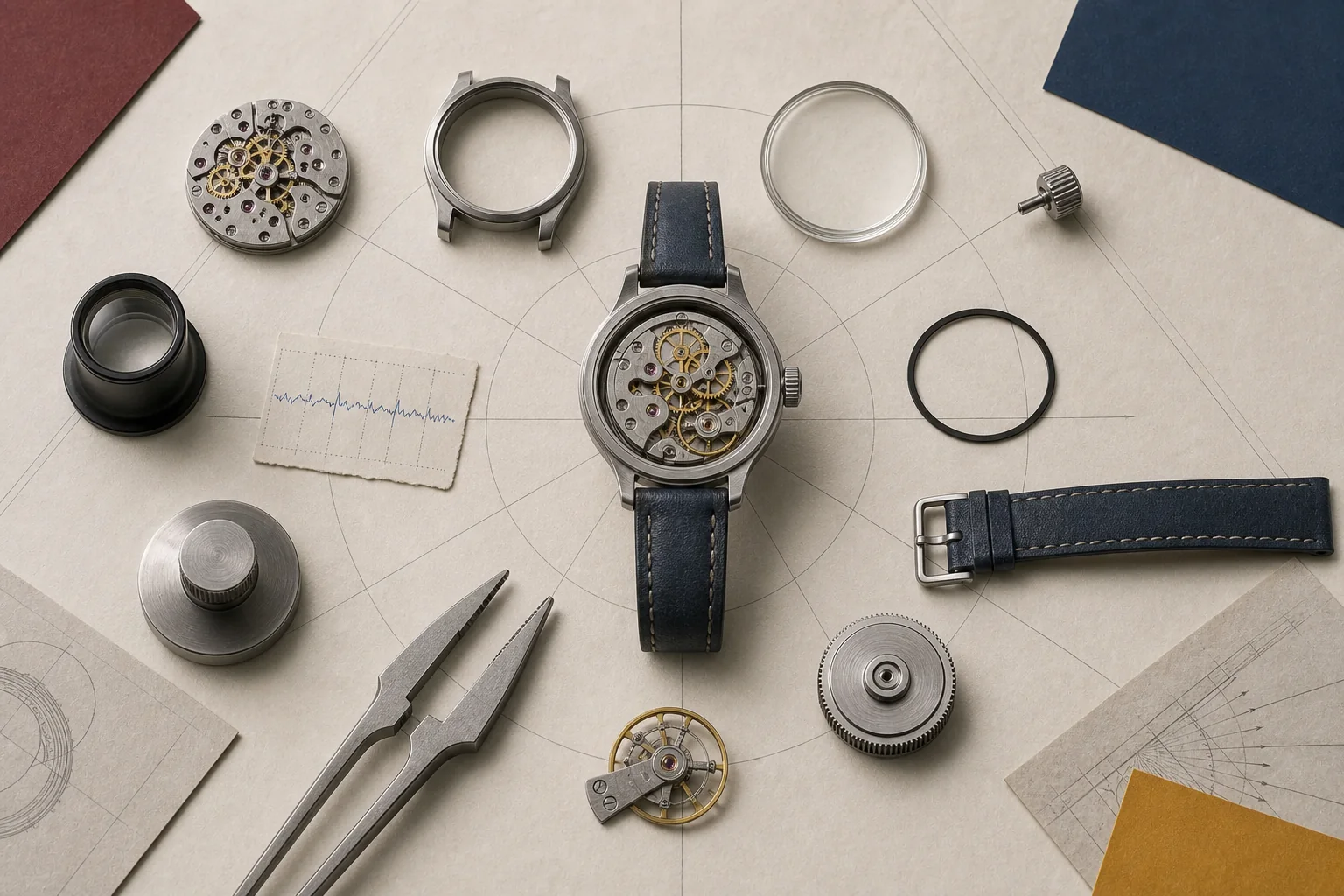
Get to know the movement
“Mechanical” covers a great many different movements. A full calibre reference is rather like a car’s model designation: it makes specifications, instructions and repair conversations much easier to navigate.
Once the calibre reference makes sense, discussing accuracy is easier. Then return to wearing the watch: its fit, the water resistance you need and the feel of steel, titanium or bronze. The picture gradually comes together.
Find out who makes the movement and which version is fitted. A brand’s own design may offer an intriguing construction; a widely used calibre may be familiar to more watchmakers. Origin is only part of the story, alongside assembly, adjustment and spare parts.
A winding habit you will enjoy
Some owners enjoy turning the crown each morning and feeling the mainspring take up tension. Others prefer to put a watch on and leave for the day, letting an automatic movement gather energy from the wrist.
Choose the habit that appeals to you. Even an automatic may need help after quiet days at a desk, so it is worth learning whether it supports hand-winding and how to restart it after a stop.
A few seconds here and there
A mechanical watch gradually drifts from reference time. Its stated tolerance tells you roughly what to expect, but the measuring conditions matter: performance on a bench and on a wrist can differ.
Imagine having to correct the time occasionally. If that already sounds tiresome, take the feeling seriously before buying. Chronometer certification adds defined testing requirements, though a watch can keep good time without a certificate.
Watch the seconds hand
The figures 21,600 and 28,800 mean six and eight small escapement steps each second. The latter usually produces a smoother-looking seconds hand, a difference that is enjoyable to see side by side.
Frequency alone does not establish quality. Construction and adjustment affect accuracy, while even the length of the hand changes the visual impression. Spend a moment watching rather than ranking the numbers.
Will it last the weekend?
Power reserve makes more sense when placed in your own calendar. Take a watch off on Friday evening and return to it on Monday morning: roughly forty hours will fall short, while around seventy-two may cover the gap.
The published figure assumes a full wind. After a quiet day, the mainspring may hold less energy, which explains why a watch can stop sooner than its specification led you to expect.
Let your wrist decide
Diameter only begins to describe fit. Long lugs can make a modest watch feel large; short, downward-curving lugs can help a bigger case settle comfortably. Thickness becomes especially noticeable under a cuff.
Bend your wrist, lower your arm and fasten your sleeve. The crown should not dig in, and the case should stay in place. A few minutes of trying it on reveal more than a chart of recommended diameters.
The feel of the metal
Steel brings a familiar weight, titanium makes a lighter case possible, and bronze gradually changes colour. These qualities affect how the watch feels throughout the day as much as how it looks.
Look at the finish too. Polished and matt surfaces show wear differently, and coatings can complicate refinishing. Ask what the case back and clasp are made from as well as the case itself.
Look through the crystal
Daylight near a window reveals things that even showroom lighting can hide. Turn the watch: are the hands clear, do reflections get in the way, and do you enjoy the distortion at a domed edge?
Sapphire resists scratches well, mineral glass is often less costly to replace, and many light marks on acrylic can be polished out. An outer anti-reflective coating can acquire marks even when the sapphire underneath remains intact.
Make room for water
If the watch will join you in a pool or the sea, start with the activities its manufacturer permits. The metres on a case back express a test pressure, rather than blanket permission to dive to that depth.
Try the crown as well. Does it close comfortably, and is the thread easy to engage? A screw-down design is useful, but water resistance depends on the whole case and the condition of its seals.
Choose functions you will use
A date window soon becomes a habit. A second time zone can be useful on a trip, while a chronograph suits someone who enjoys timing things. Each extra function also brings more setting instructions and potentially higher servicing costs.
Ask to be shown the controls on the actual watch. Calendar instructions deserve particular attention: using the quick-set during the prohibited period can damage the mechanism.
Include the strap in the decision
Sometimes moving a clasp by one position changes the whole experience of a watch. Length, flexibility and buckle placement matter just as much as the colour of the leather.
Check the lug width and attachment. Conventional sizes offer more replacements, whereas an integrated strap may require a dedicated part. Ideally, try the watch in the configuration you intend to wear.
Think beyond the purchase
A useful conversation with a retailer reaches beyond the display: where is the watch serviced, what does the warranty cover, and what might a service or replacement strap cost? Take the service interval from the exact model’s instructions; manufacturers differ.
Once fit, operation and future care make sense, return to that first impression. If you still want to put the watch on, rather than simply admire its photograph, you have learned something worthwhile.
Sources
Technical and historical facts were checked against material from manufacturers, museums and specialist organisations. Read more in How we prepare articles.