

It began with everyday life
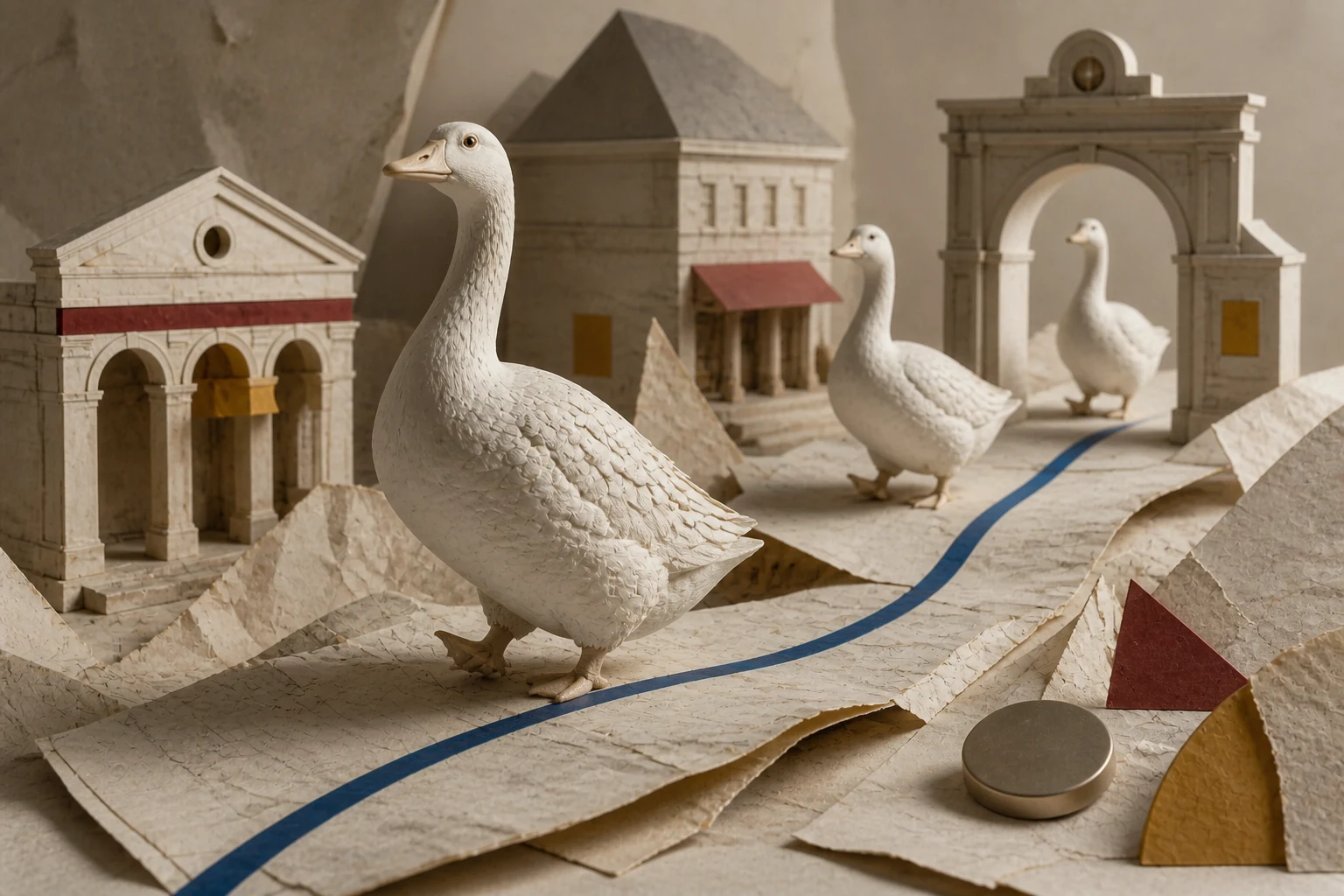
Arzamas was connected by roads to Moscow, Nizhny Novgorod and lands to the southeast. Surrounding farms grew onions and raised geese, and trade carried their produce far beyond the town.
Local stories bring a personal scale to the history of Russian watchmaking. Turning a story into an object introduces other considerations: case proportions and the choice of movement that will give the watch its rhythm.
The bird’s connection with Arzamas began long before tourism branding. It was grounded in work, farming and journeys to market. Perhaps that is why the goose still feels so much at home here.
A real breed behind the emblem
Arzamas geese developed through selection on local farms. Historical descriptions present a sturdy bird once bred in part for goose fighting, and later selected for meat qualities too.
There is no single birthday for the breed; its characteristics developed across generations. FAO materials recorded a decline in commercial numbers towards the end of the Soviet period, with small private groups surviving. This is the history of a rare breed, rather than evidence of complete extinction.
A journey in little shoes
The Arzamas Museum of History and Art preserves a particularly memorable travel story. In its account, geese were driven to buyers on foot, their feet protected with tar and sand to form something like a durable sole.
These became the geese’s “bast shoes”. The account is best understood as a local story passed down to us, rather than a detailed technical record. It tells us something about how the town remembers its trading life.
From local story to cultural life
The museum connects the phrase “goose capital” with Catherine II’s visit in 1767. According to the story, the sheer number of birds impressed the empress. The goose later became associated with the Arzamas literary society, active from 1815 to 1818.
More recently, the bird has returned through museum and town projects, and a bronze goose monument appeared in Arzamas in 2012. A trading story has found another life in the way a town presents itself.
How the goose found its way onto a watch
The goose combines a recognisable outline with a local sense of humour. For an object that stays close to its owner, that is an appealing combination: a small shape with a story to return to.
The Arzamas goose became the starting point for the first Local Time release. We are interested in the connection between a watch and a particular place, its habits, memory and ability to recognise itself in an unexpected detail.
Sources
Technical and historical facts were checked against material from manufacturers, museums and specialist organisations. Read more in How we prepare articles.